Your brand is losing deals before you even get on the call. Not because your product is weak — because your identity no longer matches where your business actually is.
A solid brand refresh strategy fixes that. Not with a new coat of paint. With a deliberate, sequenced process that realigns your visual identity with your positioning, your market, and the clients you actually want.
This is that process — broken down into 5 exact steps, with timelines, business triggers, and the metrics that tell you it’s working.
Table of Contents
- What Is a Brand Refresh Strategy — and What It’s Not
- 5 Business Signals That Tell You It’s Time
- The 5-Phase Brand Refresh Strategy Process
- Brand Refresh vs. Full Rebrand: The Critical Difference
- How to Measure Brand Refresh ROI
- Frequently Asked Questions

What Is a Brand Refresh Strategy — and What It’s Not {#what-is}
A brand refresh strategy is the structured process of updating a brand’s visual identity, messaging, and positioning without discarding its existing equity.
It’s not a rebrand. It’s not a logo swap. And it’s definitely not something you do because you’re bored with your current look.
A refresh targets specific elements that have drifted from your business reality — your typeface, color system, tone of voice, or visual language — while preserving what your audience already recognizes and trusts.
What a brand refresh strategy actually involves:
- Auditing your current identity against your current market position
- Identifying the gap between how you look and how you want to be perceived
- Updating specific brand elements systematically — not randomly
- Stress-testing the updated system across all touchpoints before launch
What it doesn’t involve: throwing everything out and starting over. That’s a full rebrand — a different process, a different budget, a different timeline.
5 Business Signals That Tell You It’s Time {#signals}
Most businesses don’t refresh their brand because they feel like it. They refresh because something is visibly broken. Here are the five triggers that signal it’s time for a brand refresh strategy:
- Your visuals no longer match your pricing. If you’ve moved upmarket but your brand still looks like it did when you started, you’re creating cognitive dissonance at the worst possible moment — when a client is deciding whether to trust you.
- You’re attracting the wrong clients. Your brand communicates something. If the enquiries you’re getting don’t match the work you want to do, your identity is speaking to the wrong room.
- Your competitors have evolved and you haven’t. Brand equity erodes slowly, then all at once. If your market has shifted its visual language and you’re still using what you built 5 years ago, you’re signalling stagnation.
- Your team can’t apply the brand consistently. If there’s no system — no clear rules for color, type, and usage — your brand breaks every time someone touches it.
- You’re about to enter a new market or launch a new offer. A brand refresh strategy before a significant business move ensures your identity supports the transition instead of contradicting it.
According to Lucidpress, companies with consistent brand presentation see revenue increases of up to 33%. Inconsistency — which is what a stale brand produces — is a direct revenue leak.
The 5-Phase Brand Refresh Strategy Process {#process}
This is how a professional brand refresh strategy is executed. Not as a design exercise — as a business operation.
Phase 1: Brand Audit (Week 1–2)
Before anything is created, everything is evaluated. This means:
- Collecting every existing brand asset: logo files, color codes, font licenses, brand guidelines (if they exist)
- Auditing brand consistency across all touchpoints: website, social media, print, proposals, email signatures
- Identifying which elements still perform and which are creating friction
The audit produces a clear brief: what stays, what gets updated, what gets removed.
Phase 2: Competitive & Market Analysis (Week 2–3)
A brand refresh strategy without market context is interior decoration. You need to know:
- What your primary competitors look like — and where the visual white space is
- What visual language your target clients associate with quality and trust in your category
- Where your current brand sits in that landscape and where you want it to sit after the refresh
This phase is why a strategic refresh produces measurable outcomes. You’re not guessing — you’re responding to data.
Phase 3: Visual Identity Update (Week 3–6)
This is where the actual design work happens — and it’s more disciplined than most people expect. Depending on your audit results, a brand refresh strategy at this phase may include:
- Logo refinement — not a redesign; a refinement of proportions, weight, spacing, or submark construction
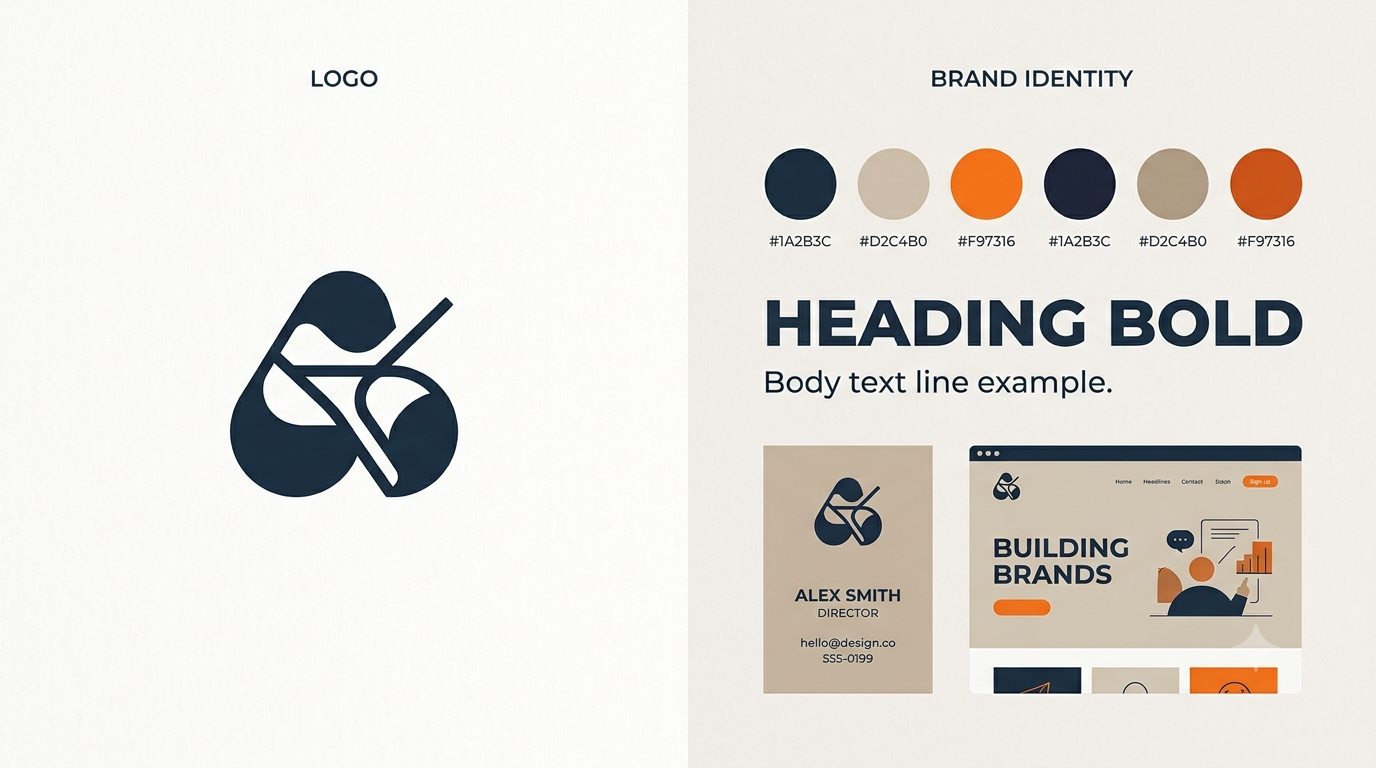
- Color system update — expanding or adjusting the palette to work across digital and print without degrading
- Typography reset — selecting a type system with the right hierarchy, personality, and licensing for commercial use
- Brand elements — patterns, icons, textures, or graphic devices that extend the identity beyond the logo
Each element is tested at real-world sizes and across real-world contexts before anything is signed off.
Phase 4: System Documentation (Week 6–7)
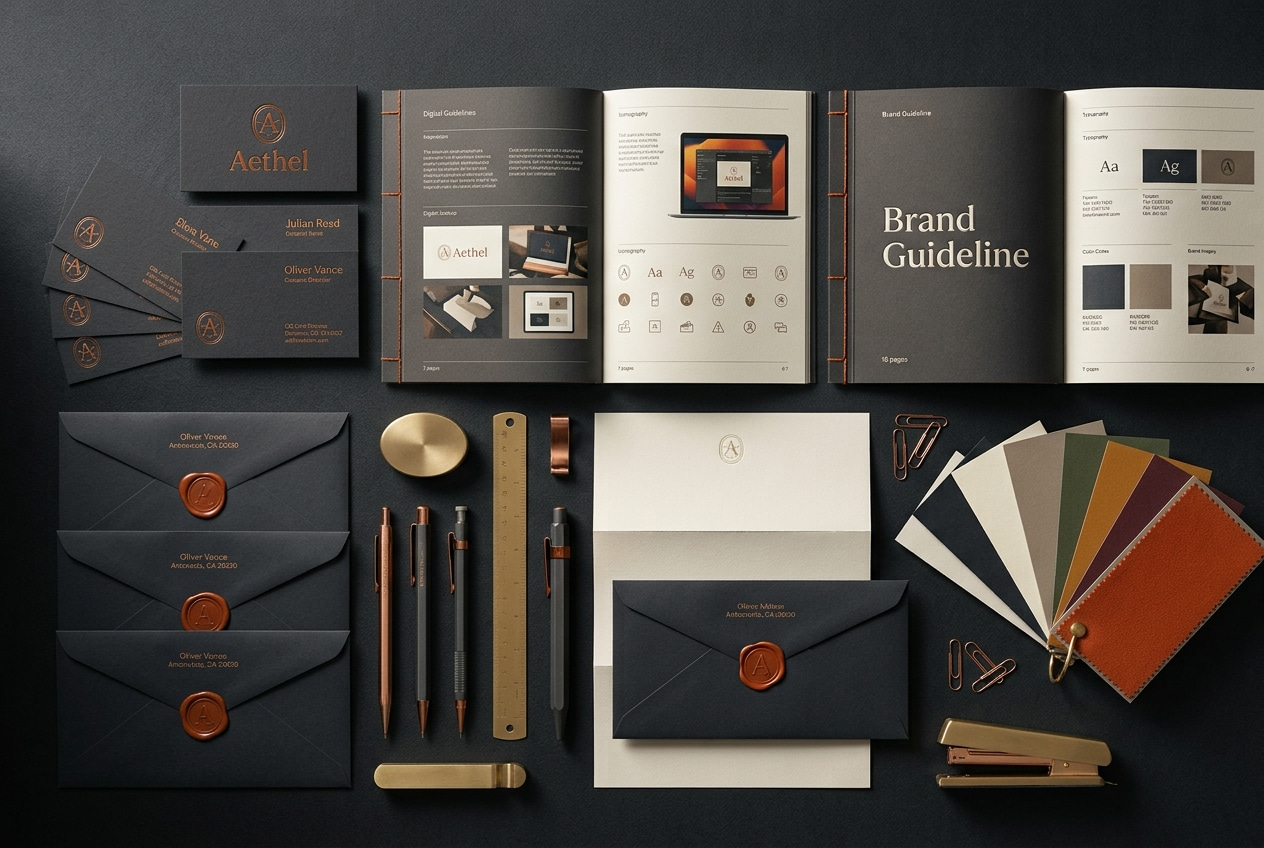
A brand that can’t be applied consistently isn’t a brand — it’s a collection of files. This phase produces a brand guidelines document that covers:
- Color values (HEX, RGB, CMYK, Pantone)
- Typography hierarchy and usage rules
- Logo variants, safe zones, and prohibited uses
- Do/don’t examples across key touchpoints
This document is what makes a brand refresh durable. Without it, the work decays within months.
Phase 5: Rollout & Touchpoint Implementation (Week 7–10)
The final phase applies the updated brand system across every relevant touchpoint — starting with the highest-impact ones:
- Website (hero, typography, color application)
- Social media profiles and templates
- Proposals and client-facing documents
- Email signatures and stationery
The rollout is sequenced by visibility and impact — not done all at once in a way that creates inconsistency during the transition.
Brand Refresh vs. Full Rebrand: The Critical Difference {#comparison}
This is the question most business owners get wrong — and it costs them either time and money they didn’t need to spend, or a half-measure that doesn’t move the needle.
| Factor | Brand Refresh | Full Rebrand |
|---|---|---|
| Scope | Update specific elements | Rebuild from scratch |
| Brand equity | Preserved | Discarded and rebuilt |
| Duration | 4–10 weeks | 3–6 months |
| Cost range | €2,000–€8,000 | €8,000–€25,000+ |
| Business trigger | Misalignment | Fundamental shift in market, audience, or mission |
| Risk level | Low — existing recognition retained | Higher — audience must relearn the brand |
| Best for | Growing businesses, upmarket pivots | Mergers, complete repositioning, market exit/entry |
The rule of thumb: if your audience still recognises and respects your brand, but it no longer accurately represents where your business is going — that’s a refresh. If your audience’s perception is fundamentally wrong and needs to be rebuilt — that’s a rebrand.
How to Measure Brand Refresh ROI {#roi}
Most studios won’t give you this. We will.
A brand refresh strategy is a business investment. It should produce measurable returns. Here’s how to track them:
Conversion rate on proposals and enquiries. If your brand previously communicated a lower price point than you’re charging, a refresh that closes that gap directly impacts close rates. Track proposal acceptance before and after.
Quality of inbound leads. A brand that attracts the right audience reduces time spent on unqualified enquiries. This is a direct productivity and revenue metric.
Average project or transaction value. Brands that communicate premium positioning command premium pricing. Consistent brand presentation enables a 13% premium on average, per McKinsey research.
Website engagement metrics. Bounce rate, time on page, and pages per session reflect how clearly your brand communicates trust and value on first contact. These should improve measurably after a web-integrated refresh.
The average ROI window: 12–18 months for full measurable impact. The first signals — enquiry quality, proposal conversion — typically shift within 60–90 days.
Internal link: View Designx Branding Services | See Brand Identity Work in Portfolio
Frequently Asked Questions {#faq}
What is a brand refresh strategy? A brand refresh strategy is the structured process of updating specific elements of a brand’s visual identity — logo, color system, typography, brand language — to realign with where the business is now and where it’s going. It preserves existing brand equity while closing the gap between current perception and desired positioning.
How long does a brand refresh take? A professional brand refresh strategy runs 4–10 weeks depending on scope. Phase 1 (audit and research) takes 2–3 weeks. Visual identity updates take 3–4 weeks. Rollout and documentation account for the final 1–2 weeks. Rushed refreshes that skip audit and research produce cosmetic changes with no strategic foundation.
How much does a brand refresh cost? A strategic brand refresh typically ranges from €2,000 to €8,000 depending on the number of touchpoints, the complexity of the existing system, and whether web implementation is included. A logo-only update costs significantly less — but produces significantly less impact. The question isn’t what a refresh costs; it’s what your current misaligned brand is costing you.
What’s the difference between a brand refresh and a rebrand? A brand refresh updates and refines an existing identity while preserving recognition and equity. A rebrand starts from scratch — new name, new positioning, new visual language. A refresh is appropriate when the brand has equity worth keeping. A rebrand is appropriate when it doesn’t — or when a fundamental business shift makes the old identity a liability.
Can a brand refresh improve my conversion rates? Yes — measurably. When your visual identity accurately communicates your positioning and price point, it reduces friction in the decision-making process for prospective clients. Companies with consistent brand presentation report revenue increases of up to 33% (Lucidpress). A brand refresh that closes the gap between perception and reality directly impacts proposal acceptance rates and inbound lead quality.
Your Brand Is Either Working or It Isn’t
There is no neutral. Every touchpoint — your website, your proposals, your social presence — is either building trust or undermining it.
A well-executed brand refresh strategy doesn’t just make your business look better. It makes your business perform better — by ensuring every first impression communicates exactly what you’re worth.
If you’re reading this and recognising your own brand in one of those five signals — that’s your sign.
Book a free Brand Audit with Designx. 30 minutes. No pitches. We’ll tell you exactly what’s working, what’s broken, and what a strategic refresh would look like for your specific business.